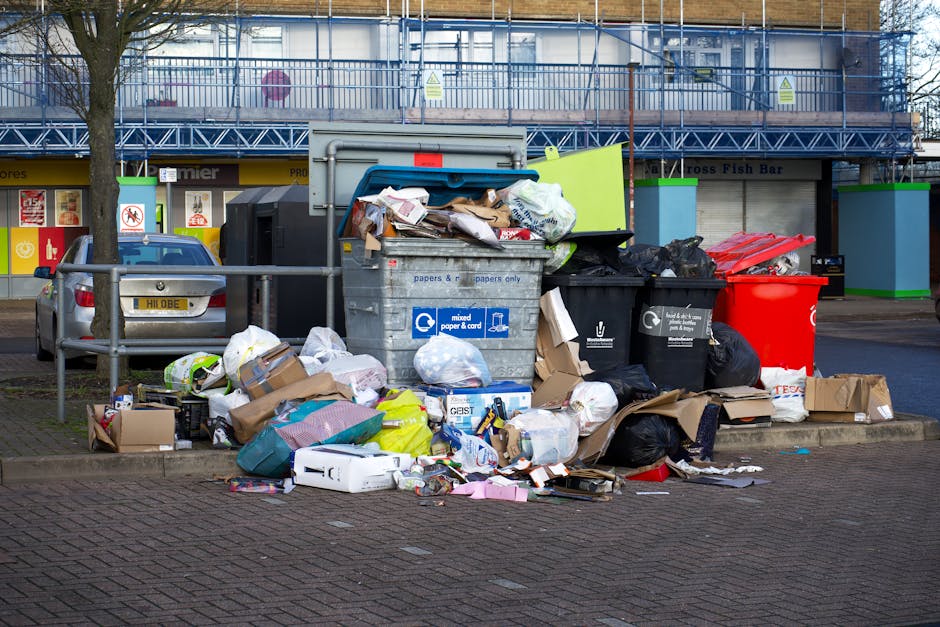
Penalty charges and licences for commercial waste in Harrow
If you run a business in Harrow, commercial waste can become awkward fast. One missed permit, one badly handled pickup, one bin left in the wrong place, and suddenly you are dealing with penalty charges that feel completely avoidable. The good news is that most of the risk comes down to simple habits: knowing what licence or authorisation is needed, keeping waste moving legally, and using a provider who understands local expectations.
This guide explains Penalty charges and licences for commercial waste in Harrow in plain English. We will look at how charges can arise, what licences or permissions may matter, how to stay compliant, and how to avoid the kind of mistakes that turn a routine clearance into an expensive headache. Truth be told, most problems are not dramatic. They are usually small admin slips. And those are the easiest ones to fix.
Key takeaway: if your business produces waste, keep records clean, make sure the carrier is authorised, and never assume a "quick tidy-up" can be treated like domestic rubbish. The rules are different, and Harrow businesses can be penalised if they get that part wrong.
Why Penalty charges and licences for commercial waste in Harrow Matters
Commercial waste is not just "rubbish from a business." It is a compliance issue, a cost issue, and sometimes a reputation issue too. In Harrow, as in the rest of London, businesses are expected to handle waste responsibly, use suitable carriers, and avoid anything that could lead to fly-tipping, blocked pavements, nuisance, or unsafe storage.
Penalty charges can come from several directions. Sometimes it is a local enforcement issue. Sometimes the problem starts with the waste being left in the wrong place, too long, or handed to the wrong person. Sometimes a business discovers too late that a contractor was not properly authorised. Let's face it, that is the sort of mistake that can keep an owner awake at 2 a.m. because nobody wants to explain why pallets, packaging, old office furniture, or mixed refuse ended up causing trouble.
The licensing side matters because waste is traceable. A business needs to know who collected it, where it went, and whether the collection was legal. That is especially important for companies in shared premises, high streets, serviced offices, workshops, and hospitality sites, where waste builds up quickly and there is often pressure to clear it "today, if possible."
If your operation is larger or more frequent, good systems are even more valuable. A tidy waste process supports safer premises, cleaner customer areas, and less risk of a nasty surprise later. It also helps if your business already uses services like business waste removal or needs occasional support with office clearance, because the right service setup can reduce the chance of penalty problems from the start.
How Penalty charges and licences for commercial waste in Harrow Works
At a practical level, the process is simple enough. Your business produces waste. That waste must be stored, collected, transported, and disposed of through an arrangement that is lawful and sensible. Where people get caught out is in the details.
First, there is the question of who is handling the waste. If you use a commercial waste contractor, they should be properly authorised to carry waste. If you are moving waste yourself, you need to understand the responsibilities that come with that role. Even a one-off clearance can create obligations. A van load of office chairs, broken shelving, packaging, and old IT items is still commercial waste if it came from a business setting.
Second, there is the issue of where the waste is placed. Waste left on a pavement, in an alley, on shared land, or outside agreed collection times can create a penalty risk. A lot of businesses think the problem is "just storage," but in practice poor placement can be treated as an enforcement issue. That is why timing matters so much.
Third, there are licence or permit-related expectations. Depending on the situation, this may involve waste carrier authorisation, site permissions, or local rules about loading, skip placement, or access. The exact requirement depends on the method used and the site conditions. That sounds a bit dry, but it is where many avoidable charges begin.
Here is the simplest way to think about it:
- the business producing the waste has duties
- the carrier collecting the waste has duties
- the place where the waste is stored or loaded may have rules
- records should show what was collected and by whom
For businesses with bulky items, mixed waste, or periodic clear-outs, services such as waste removal can be a practical way to stay organised without improvising at the back door with a stack of broken furniture and a ticking clock.
What "licence" usually means in everyday terms
People use the word licence loosely. In real life, they may be talking about a waste carrier authorisation, a permit for a vehicle or container, permission to use a location, or terms agreed with a landlord or managing agent. The label matters less than the substance: is the waste movement lawful, traceable, and appropriate for the site?
That distinction matters because a lot of business owners assume that if the collection was arranged and paid for, it must be fine. Not always. You still need confidence that the arrangement is suitable, and that the paperwork would make sense if anyone asked questions later.
Key Benefits and Practical Advantages
When a business handles commercial waste properly, the benefits are not just legal. They are operational. They affect how the premises feels, how staff work, and how confidently you can deal with inspections or complaints.
- Lower penalty risk: the most obvious benefit. Fewer surprises, fewer arguments, fewer expensive mistakes.
- Cleaner premises: rubbish does not sit around becoming messy, smelly, or unsafe.
- Better staff morale: nobody enjoys working around overfilled bags and old packaging stacked by the door.
- Stronger records: useful if you ever need to show how waste was handled.
- Less interruption: waste is cleared on a known schedule rather than becoming a last-minute panic.
There is also a quieter benefit: confidence. When your waste process is handled properly, you stop worrying about whether something was left in the wrong place or whether the contractor had the right authority. That peace of mind is worth something, especially for small business owners who already have enough on their plate.
If your waste stream includes old desks, chairs, filing cabinets, or end-of-line fixtures, using the right disposal route helps keep your workplace tidy and compliant. A business can also pair scheduled collections with periodic specialist jobs like furniture disposal or larger one-off clearances, which helps prevent ad hoc dumping and the mess that often follows it.
Who This Is For and When It Makes Sense
This topic matters to a broad range of Harrow businesses, not just big firms. In fact, smaller businesses often need the clearest guidance because they do not have an internal facilities team to catch mistakes before they happen.
It is especially relevant if you are:
- running an office, studio, consultancy, or shared workspace
- managing a retail unit or hospitality venue
- overseeing a workshop, trade premises, or storage unit
- dealing with regular cardboard, packaging, or mixed waste
- planning a refurbishment, relocation, or periodic clear-out
- responsible for landlord, agent, or building-management compliance
It also makes sense if you are the person who ends up "just sorting it out" whenever the bins overflow. We all know that person. Often it is the office manager, the operations lead, or the founder who does ten jobs before lunch. If that sounds familiar, getting the waste side properly set up is a relief, not a luxury.
For premises with furniture turnover, storage issues, or seasonal clutter, services such as furniture clearance or office clearance can reduce the temptation to leave bulky items outside "just for now," which is exactly how small penalties begin.
Step-by-Step Guidance
Here is a sensible way to approach commercial waste compliance in Harrow without overcomplicating it.
-
Identify the waste type.
Separate general commercial waste from bulky items, recyclables, confidential material, and anything potentially hazardous. A mixed pile is where problems tend to snowball.
-
Check how the waste will be collected.
Decide whether it is a regular collection, a one-off clearance, or a mix of both. A one-off office move needs a different plan from a weekly bin route.
-
Confirm the carrier is suitable.
Use a provider that can explain how the waste will be handled and what paperwork or records are available. If answers are vague, that is a warning sign.
-
Agree the storage and access point.
Make sure staff know where waste should go, who is allowed to move it, and when collection will happen. This is boring, yes, but boring saves money.
-
Keep the site tidy until pickup.
Do not allow waste to creep into walkways, rear yards, or shared access routes. That is where complaints and enforcement attention often start.
-
Keep simple records.
File collection details, dates, and any notes about the load. You do not need a grand system. Just enough to prove the process was handled properly.
-
Review the process after busy periods.
If your office has a clear-out, renovation, or relocation, look back and see what nearly went wrong. Small improvements now avoid larger costs later.
For refurbishment or building-related jobs, it can help to coordinate waste early with specialist services such as builders waste clearance. Construction debris creates different risks from office paper and packaging, and it is usually less forgiving if left unmanaged.
Expert Tips for Better Results
In our experience, the businesses that stay out of trouble do a few simple things consistently. None of it is flashy. It just works.
- Do not wait until the last day. Waste left until closing time is more likely to be pushed into the wrong spot.
- Use one person to own the process. If everyone is responsible, no one is.
- Separate bulky items early. Desks, chairs, broken shelving, and mixed waste should not be treated as the same problem.
- Keep access clear. A blocked loading bay or rear passage can lead to rushed decisions and rushed decisions are messy.
- Ask about documentation before the truck arrives. That question feels small, but it saves a lot of back-and-forth later.
A practical tip many businesses miss: build waste checks into routine admin. If you already review deliveries, cleaning, or maintenance, add waste collection to the same rhythm. It becomes part of the normal week instead of a separate emergency. Simple, really.
And if your business has a mix of operational clutter and storage overflow, a broader clearance approach can help. Services like house clearance, home clearance, or loft clearance may be relevant in mixed-use settings or landlord-managed properties where different waste types build up across a site.
Common Mistakes to Avoid
Most penalties are not caused by dramatic misconduct. They come from small habits that look harmless on a busy Tuesday morning.
- Leaving waste on the pavement "just for a bit." Even short periods can create complaints.
- Assuming a contractor is authorised without checking. Never rely on a smile and a business card.
- Mixing commercial waste with household items. That can complicate disposal and tracking.
- Using the wrong container or access point. Shared spaces and narrow alleys are often sensitive.
- Forgetting bulky furniture or damaged fixtures. These items are the ones that sit around longest.
- Not keeping proof of collection. If something is questioned later, memory alone is weak evidence.
One common scenario is the office move. Staff are busy, IT is unplugging screens, the last chairs are being stacked by the exit, and someone says, "We'll sort the rest tomorrow." That tomorrow is where problems start. Not because anyone is careless, but because the day gets away from them. It happens.
Another mistake is assuming that a cheaper option is automatically fine. If a price looks unusually low, ask what is included and how the waste is handled. Cheap is lovely until it costs twice as much in penalties, delays, or a mess you now have to explain.
Tools, Resources and Recommendations
You do not need fancy software to manage commercial waste well. Most businesses in Harrow can stay organised with a few practical tools and a clear routine.
- Collection log: a simple spreadsheet or notebook with dates, load type, and who collected it.
- Site waste map: a basic note showing where waste is stored, especially on larger premises.
- Staff briefing: a one-page instruction for cleaners, office staff, or maintenance teams.
- Photo records: useful before and after a clearance, especially for large items or awkward spaces.
- Regular review dates: a calendar reminder after busy periods, moves, or refurbishments.
From a service perspective, businesses often benefit from combining routine waste management with occasional specialist support. That might mean scheduled business waste removal, a one-off waste removal visit, or targeted collection of items that are awkward to store safely.
If sustainability matters to your team, it is also worth thinking about how your waste is sorted before it is collected. A cleaner separation between reusable, recyclable, and residual waste tends to make the whole process smoother. You get less clutter, fewer surprises, and a better story for the business overall.
Law, Compliance, Standards, or Best Practice
Commercial waste compliance in the UK is built around responsibility, traceability, and proper handling. The precise details can vary depending on the waste type, the site, and how the collection is arranged, so it is wise to avoid blanket assumptions.
As a general best practice, businesses should:
- use an appropriate and authorised waste carrier
- store waste safely until collection
- keep access routes clear and lawful
- avoid fly-tipping or leaving waste in public or shared spaces
- retain records of collection and disposal where appropriate
In practical terms, this means the business should be able to answer basic questions if asked: what waste was removed, when, by whom, and under what arrangement? That is the kind of clarity that protects you if a complaint or check ever happens.
Where licences or permits are involved, the safest approach is to confirm the specifics before the job begins. Do not guess. Do not rely on what "usually happens." And if a site has landlord rules, managing-agent rules, or shared-access restrictions, treat those as part of compliance too. They may not sound dramatic, but they matter.
Practical summary: compliance is mostly about doing ordinary things consistently well. Keep waste contained, use the right collector, document the handover, and do not let convenience turn into a penalty. That is the whole game, really.
Options, Methods, or Comparison Table
Not every business needs the same waste arrangement. Some need weekly bins, some need occasional collections, and some need a one-off clearance after a move or refurbishment. The right approach depends on how waste is generated and how quickly it builds up.
| Method | Best for | Pros | Watch-outs |
|---|---|---|---|
| Regular commercial collection | Ongoing waste from offices, shops, and hospitality sites | Predictable, tidy, easier to plan | Needs good scheduling and space for bins |
| One-off waste removal | Clear-outs, backlog, unexpected bulk waste | Fast reset, minimal long-term commitment | Needs careful planning if there are bulky items |
| Specialist clearance | Furniture, office contents, mixed bulky waste | Good for awkward loads and time pressure | Must still be checked for proper authorisation and handling |
| Self-managed disposal | Businesses with vehicles and internal capability | Flexible if done correctly | Higher risk if rules, records, or permissions are overlooked |
If your site includes soft furnishings, mixed office contents, or items from a relocation, specialist options such as furniture clearance or furniture disposal can be more efficient than forcing everything through a standard bin process.
Case Study or Real-World Example
Here is a realistic example. A small design agency in Harrow prepares to move from a shared office. Over the course of a week, the team clears broken chairs, old monitors, packaging, and a few awkward storage items from a back room. Because everyone is busy, the waste starts collecting near the rear exit. It is out of the way, until it is not.
One morning, the building manager flags that the access route is becoming cluttered. Nothing dramatic has happened yet, but it is the sort of issue that can lead to complaints or charges if left alone. The agency pauses, separates the waste, confirms the collection arrangement, and gets a proper clearance booked. The difference is not glamorous. It is simply timely.
After the clearance, the team keeps a basic record of what was taken and when. That helps when the building manager asks for confirmation later. No fuss, no conflict, no "we thought someone else sorted it."
The real lesson? Most waste problems are solved before they become public problems. A five-minute decision early in the week is often worth far more than a big apology later.
Practical Checklist
Use this checklist before any commercial waste collection or clearance in Harrow:
- Identify the type of waste you are dealing with
- Separate bulky, recyclable, and ordinary waste where possible
- Confirm who is collecting it and whether they are suitable for the job
- Check if any permission, permit, or site rule applies
- Keep the waste inside the agreed storage area until collection
- Make sure access routes stay clear
- Brief staff so waste is not moved to the wrong place
- Keep a record of the collection or clearance
- Review the process after the job if anything felt rushed or unclear
If you are unsure where to start, a practical first step is to compare your current process with a more structured service approach. Many businesses discover they do not need more effort; they need a better routine. That is all.
Get a free quote today and see how much you can save.
Conclusion
Penalty charges and licences for commercial waste in Harrow are not just a compliance topic. They are a day-to-day business issue that affects cost, safety, reputation, and peace of mind. The businesses that manage it best are usually not doing anything fancy. They are simply organised, consistent, and clear about who handles what.
If you remember only one thing, let it be this: do not treat commercial waste like a background task. Once the right systems are in place, the whole thing gets easier. Cleaner premises, fewer interruptions, fewer unpleasant surprises. Nice, really.
And if your waste situation is already starting to feel a bit tangled, that is fine. It happens to good businesses too. The important part is sorting it properly now, before a small issue becomes a costly one. A calm, tidy setup has a way of paying you back.
Frequently Asked Questions
What are penalty charges for commercial waste in Harrow?
They are enforcement or financial penalties that can arise when commercial waste is handled incorrectly, left in the wrong place, or passed to someone without the right authority. The exact outcome depends on the situation, but the risk usually increases when waste is poorly managed or undocumented.
Do I need a licence for commercial waste collection?
Often, what people mean is a waste carrier authorisation or another form of permission connected to collection or storage. The exact requirement depends on how the waste is being moved and where it is being kept. It is best to check before the collection rather than assume it is covered.
Can I leave business waste outside my premises for pickup?
Only if it is placed lawfully, safely, and in line with site rules and collection arrangements. Leaving it on pavements, in shared access routes, or outside agreed times can create problems. A neat, controlled storage point is usually the safer option.
What counts as commercial waste?
Any waste generated by a business, office, shop, workshop, hospitality venue, or other commercial activity counts as commercial waste. That can include paper, packaging, furniture, fixtures, and mixed items from clear-outs or refurbishments.
How can I avoid penalty charges?
Use a suitable waste collector, keep the site tidy, store waste properly, and maintain basic records. Most penalties come from preventable mistakes, not complicated legal disputes. A clear process goes a long way.
Is furniture from an office move treated differently?
Yes, it can be. Bulky office items often need a different collection approach from general bagged waste. If you are clearing desks, chairs, cabinets, or reception furniture, a more specialist service is often the smoother option.
Do small businesses in Harrow need to worry about this?
Absolutely. Small businesses can be just as exposed as larger ones, sometimes more so, because they may not have dedicated facilities or compliance teams. The good news is that a simple routine usually solves most of the risk.
What records should I keep?
Keep the basics: what was collected, when it was collected, who collected it, and any notes about the arrangement. You do not need a huge archive, but you do need enough to show the waste was handled properly if questioned later.
What should I do if a contractor cannot explain their paperwork?
Pause and ask for clarity before allowing the collection to go ahead. If the answers remain vague, that is a warning sign. It is far better to delay a job than to discover later that the waste was handled badly.
When is a one-off waste removal better than regular collections?
A one-off service is often better for moves, refurbishments, stock clear-outs, or sudden bulky waste. Regular collections are better for ongoing day-to-day waste. Many businesses use both, which is often the neatest setup.
Can commercial waste problems affect my building manager or landlord?
Yes, especially where waste is left in shared areas, access routes, or communal spaces. Poor handling can create complaints and extra pressure on the building management side, so it is worth keeping those relationships clean and cooperative.
What is the safest first step if I am unsure about compliance?
Start by reviewing what waste you produce, how it is currently stored, and who is collecting it. Then confirm whether the arrangement makes sense for the site. A short check now is much better than a long explanation later.
For businesses that want a cleaner, more dependable waste setup, the smartest move is to combine clear internal habits with a service that can handle the practical side properly. If you are comparing options, take a look at pricing and quotes, and if you want to understand the team behind the service, you can also review the about us page. A little due diligence goes a long way.